
This is a copy of a blogpost written on May 31, 2023 by me on Medium and published by Comsysto Reply GmbH.
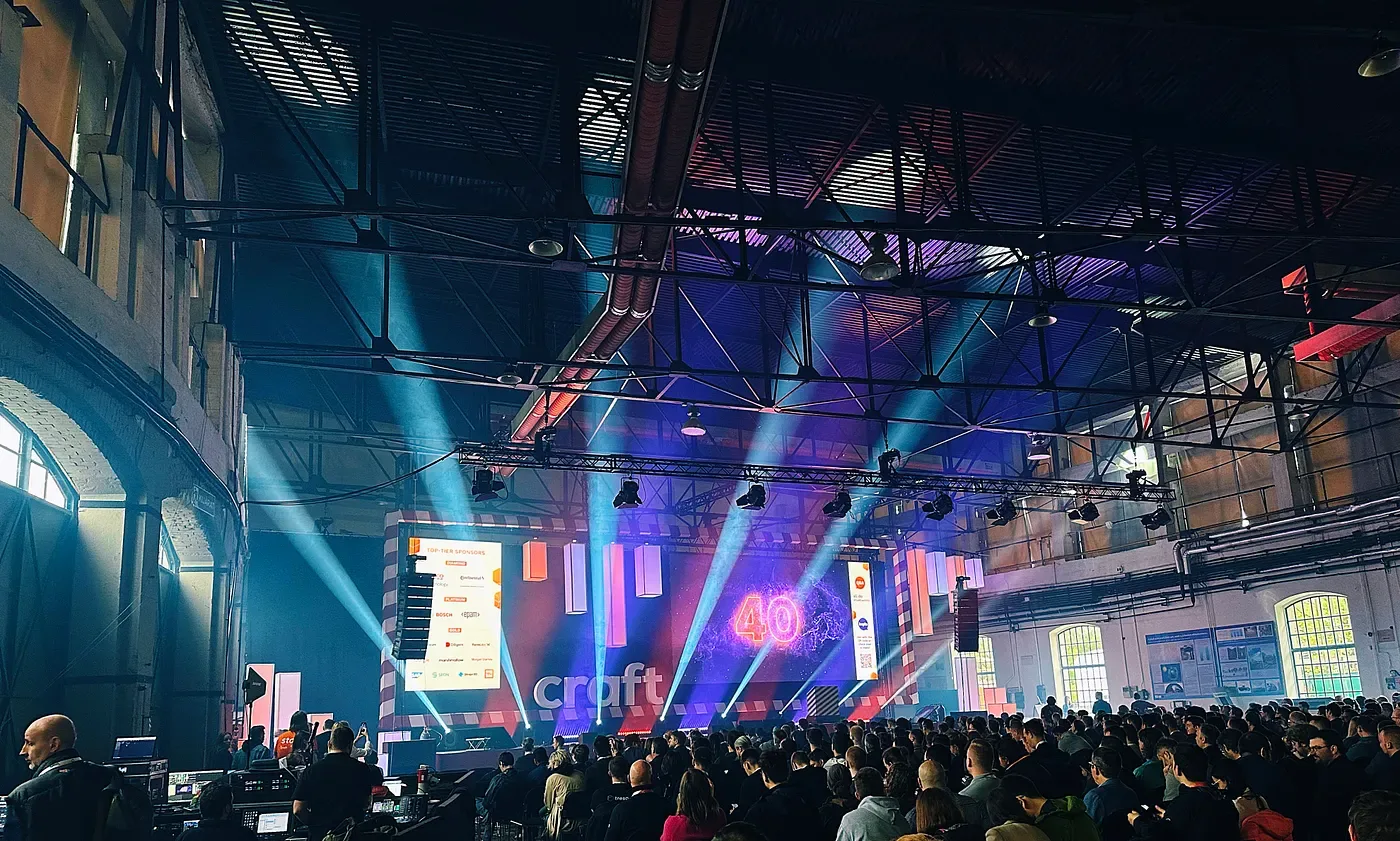
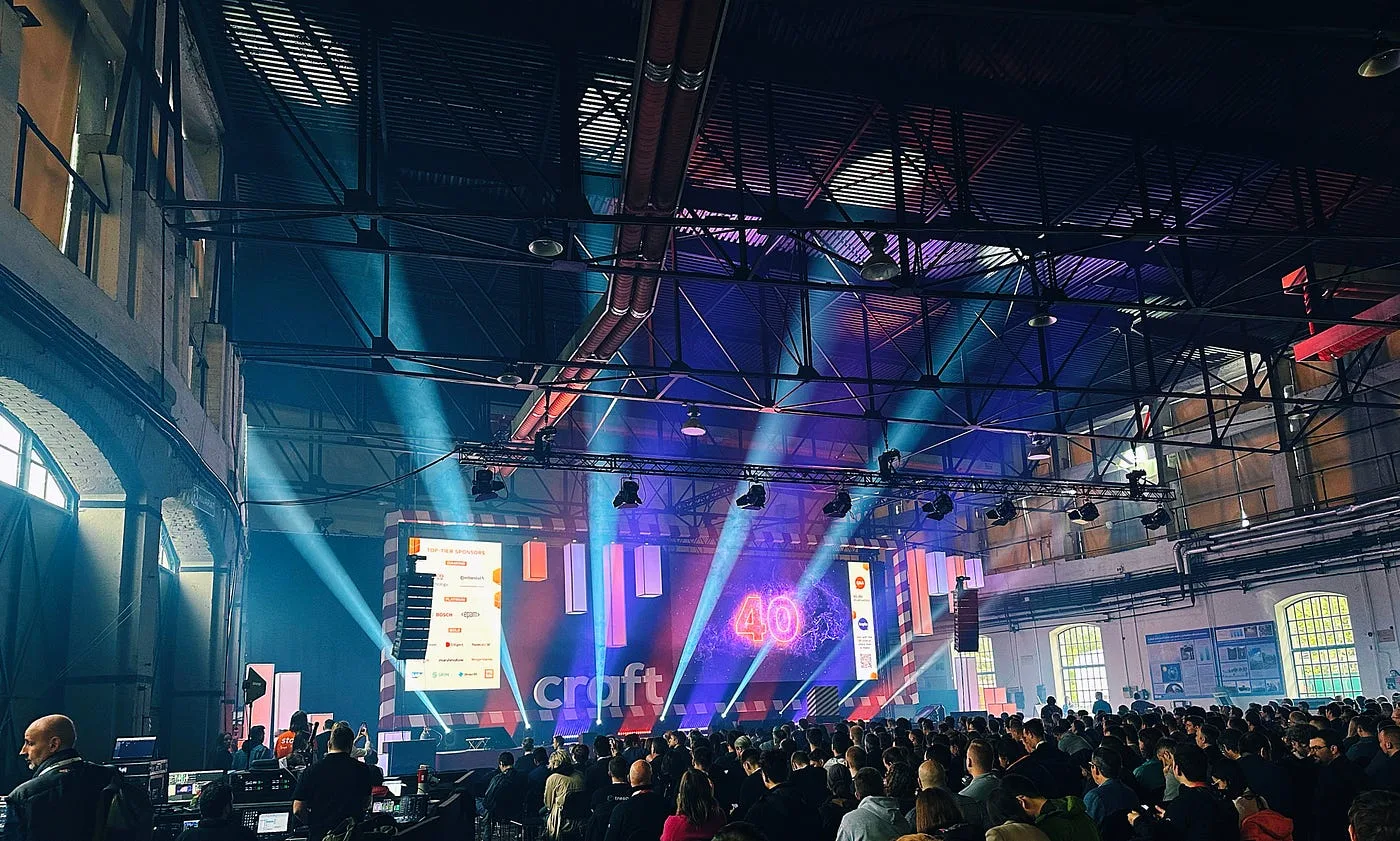
True to the motto “the more the merrier” we filled up half a train compartment traveling from Regensburg, Munich, and Berlin to Budapest, Hungary. We attended the 2-day Craft Conference, a festival-like conference about the software delivery craft. It takes place in Budapest, in one of the largest railway museums in Europe.
As a group of 18 people, we traveled to the conference, attended almost every session, and shared our thoughts and key takeaways in Slack in real-time. In this blog post, we'll provide you with highlights from the conference, including unmissable talks and trending topics. Additionally, we'll offer valuable guidance to help you make the most of your future conference visits. Let's dive in!
Highlights from the conference
Keynote by Sam Newman — You Keep Using That Word
The word in question is “asynchronous”. According to him (and his Twitter followers) the word asynchronous has many confusing and contradictory meanings in the context of distributed computing. It ranges from non-blocking clients, message-broker-based communication, to inbox-based message passing. Neither the definition given in the Reactive Manifesto, nor the Oxford English Dictionary definition (which is on packet-transmission level) was helpful.
Our key takeaways:
1) Be careful with words like “async” that you use everyday. Double-check your team has the same understanding”
2) You can base an entire keynote on dictionary quotes and twitter responses.
Best Talks
Tangible Software Quality by Gojko Adzic and Sigurdur Sigge Birgisson
This talk focused on defining and understanding software quality from a holistic perspective. The two speakers presented a set of guidelines to consider software quality holistically.
Their first statement was that the presence of quality cannot be solely determined by the absence of bugs. For example, a game can still be successful even with bugs, whereas a bug-free but boring game may not. They highlighted the importance of describing multiple qualities (plural!) relevant to the product and its users, as tradeoffs in quality are a product decision. Finding out what quality your users expect is not a simple task. You can gather feedback from users complaining more easily, rather than expecting them to express their specific desires.
The three stages of cost-benefit analysis are utility, differentiation, and saturation, which are influenced by market factors rather than the company’s preferences. One method to identify differentiation is the billboard test (= at what point would you put this capability on a billboard). Additionally, they shared Ikea’s use of an automation-versus-observability model for risk-based evaluation of quality attributes. They finished by suggesting measuring and visualizing quality but cautioned against going crazy with automation.
Our main takeaway:
Be way more specific about quality!
Day 2: The Art of Architecting for Scale by David Leitner
This talk highlighted the importance of striking a balance between reuse and autonomy, simplicity and technical excellence when addressing organizational and technical scaling.
This wasn’t the only talk that emphasized that modularisation and distribution are independent concepts. A poorly modularised system in a single deployment unit is known as a “big ball of mud”, but increasing the number of deployment units (without adjusting the architecture) merely gives you a distributed monolith. David made the distinction between complicated monolithic systems, where reliability is the leading cause of failure, and complex distributed systems, where availability is often the culprit.
The main benefit of the distribution lies in clear ownership, but it comes at the cost of the eight fallacies of distributed computing.
The art is to:
- design with failure in mind,
- architect for the end-2-end customer journey,
- architect driven by the given availability,
- maintain a non-negotiable zero-downtime mindset,
- and embrace chaos in architecture.
Words of wisdom (and sarcasm)
Here is a collection of serious and less serious quotes we picked up in all of the talks our group attended.
“Don’t just draw boxes, draw hexagons!” #teamhexagon
“Pattern languages should be like Lego, not Playmobile.”
“Hidden cost is not just about salary.”
“Let me figure out how it works == it sucks.”
“Technical debt is not the problem, repaying it is the problem!”
“Don’t be a bully in code reviews”
“It’s cheaper to buy everyone a Minecraft license than invite everybody for a beer.”
“If your name is on a book, you are NOT automatically an expert.”
“Never call your product Next Generation Something — by the time it comes out it will be old.”
“Antipattern; This time we do it RIGHT!”
“A billions dollars always helps!“
What’s trending
Several notable trends caught our attention during the event. We will go over microservices, hexagonal architecture, test-driven development, software quality, domain-driven design, organization design, and tech trends one by one.
Obviously, software architecture was the main topic, featuring different flavors of the monolith versus microservice debate. Overall, the microservice hype is over and monoliths with clear boundaries are being appreciated once again. Hexagons were everywhere, as hexagonal architecture is an increasingly viable approach for isolating core domain components within the applications which is also becoming more common in our projects. The consensus that emerged and that we also settled on in our daily work emphasized the absence of a one-size-fits-all solution, highlighting the importance of clear business drivers for modularisation and selecting communication patterns accordingly.
Test-driven development (TDD) and software quality were also big topics, with insights on tangible code quality during product development (aka difficult questions we will start asking in our projects), outside-in testing, and property-based testing. Overall, BDD and TDD are part of our engineering culture, and we’ve already deep-dived into some topics such as SpecByExample.
While not always explicitly highlighted in specific talks, the principles of domain-driven design (DDD) and its significance were present across various sessions. Now that AI is writing our code we can finally focus on what really matters: investing in understanding the business domain, workflow intricacies, and designing appropriate boundaries.
Organization design principles highlighted the value of models such as unfix, team topologies, or independent value streams, and covered topics across technical leadership, remote work culture, dynamic reteaming, and mentoring.
Exciting tech trends that made it onto the conference agenda were Web Assembly not only for the front end, making the most of generative AI, and the evergreen imperative versus functional programming debate. We learned about new concepts and got reminded about all the awesome things happening in our industry. It reinforced our commitment to staying on top of industry trends and incorporating them into our daily work.
Planning Guide
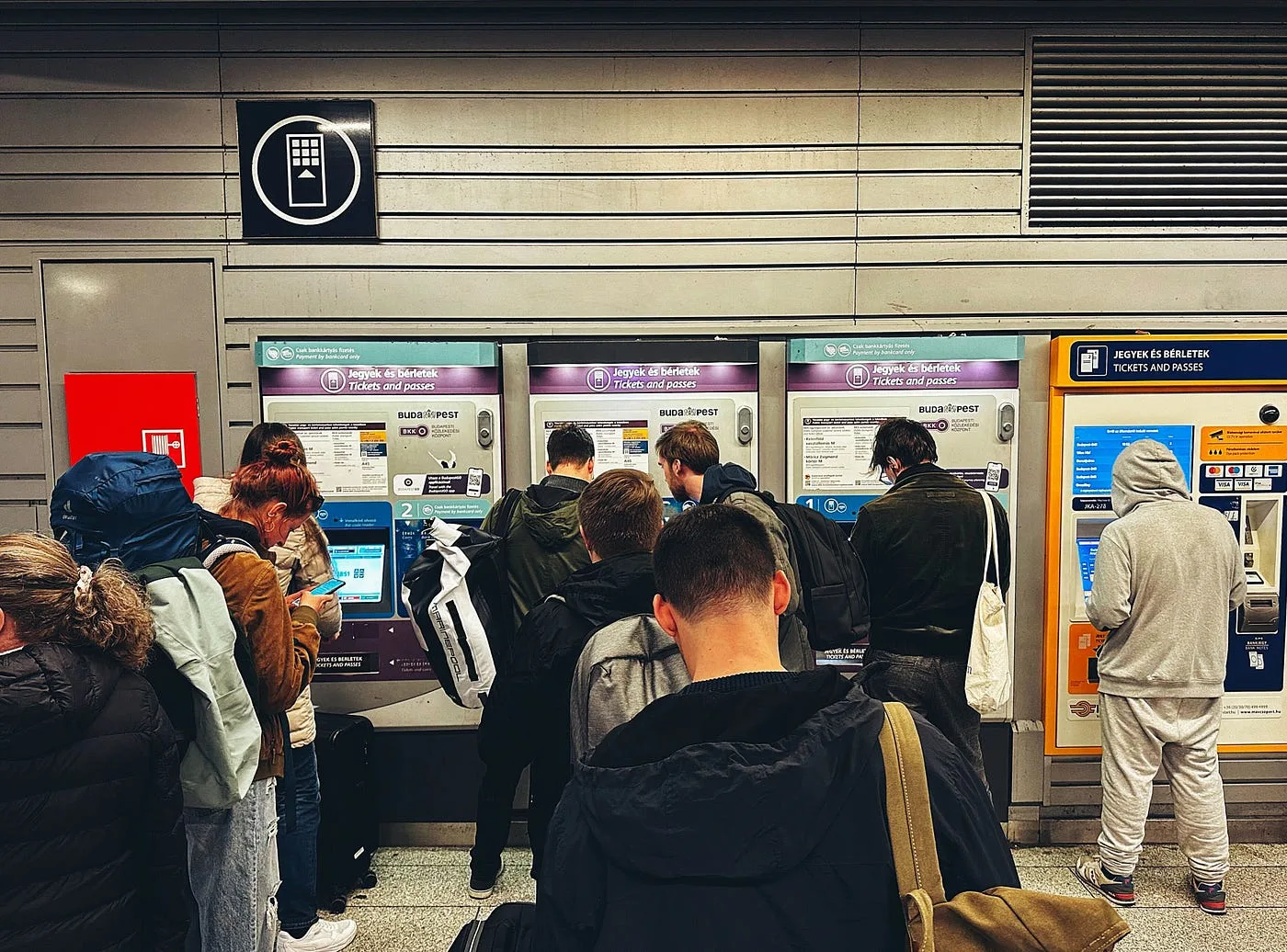
Here is our advice on how to make the most of your conference day. We will go over ways to prepare for your next conference, strategies to get you through the day, and good rules of thumb to keep in mind.
Before the conference
Check the speaker lineup on the website (and the bio pictures!)
Download the conference app and create your personal itinerary
Talk to your colleagues: compare notes and past experience
During
Always choose a seat on the side
If the speaker doesn’t convince you in the first 10 minutes (in German we have a great word for this “Vertrauensvorschuss”), then switch sessions
Take notes and pictures of the slides (our group had a Slack channel for the conference and created a thread for every talk we attended to share our notes in real-time)
Always bring a fresh coffee/drink to the talk
Make sure to take a break, e.g. by skipping a slot in the afternoon
If available: use the live stream on conference apps strategically to get some sun or catch a later train
Rules of thumb
If in doubt: Choose the talk on the main stage
In-person sessions beat any remote sessions
(if you are unsure if the speaker will join in person ask the MCs)Anti-cyclical timing (coffee line + lunch line, e.g. chain carrousel )
Vendors have games (Japanese puzzle, AR bugs)
Decision support
If you’re interested in a wide variety of software topics and want to learn “a bit of everything” …
If you enjoy festival vibes or trains (big ones or a mini-train you can ride around the museum grounds) …
If you want to see a mix of speakers that are a bit hit-or-miss with some big names included in the lineup …
… then Craft Conference is right for you!

By sharing the conference’s highlights and offering a planning guide, we hope to help you maximize your future conference visits. Embrace the learning, networking, and inspiration that conferences offer, and continue your journey toward professional growth and excellence in the software delivery craft.
Want to know which conference we’re attending next? Want to share your conference recommendations with us? Let’s connect on LinkedIn.
Want to know what we do, when we’re not attending conferences across Europe? Find out more about our projects and our benefits on our website.